Changing Our Eyes

Then I saw in the right hand of him who was seated on the throne a scroll written within and on the back, sealed with seven seals. 2 And I saw a mighty angel proclaiming with a loud voice, “Who is worthy to open the scroll and break its seals?” 3 And no one in heaven or on earth or under the earth was able to open the scroll or to look into it, 4 and I began to weep loudly because no one was found worthy to open the scroll or to look into it. 5 And one of the elders said to me, “Weep no more; behold, the Lion of the tribe of Judah, the Root of David, has conquered, so that he can open the scroll and its seven seals.” 6 And between the throne and the four living creatures and among the elders I saw a Lamb standing, as though it had been slain, with seven horns and with seven eyes, which are the seven spirits of God sent out into all the earth. 7 And he went and took the scroll from the right hand of him who was seated on the throne. 8 And when he had taken the scroll, the four living creatures and the twenty-four elders fell down before the Lamb, each holding a harp, and golden bowls full of incense, which are the prayers of the saints. 9 And they sang a new song, saying, “Worthy are you to take the scroll and to open its seals, for you were slain, and by your blood you ransomed people for God from every tribe and language and people and nation, 10  and you have made them a kingdom and priests to our God, and they shall reign on the earth.” 11 Then I looked, and I heard around the throne and the living creatures and the elders the voice of many angels, numbering myriads of myriads and thousands of thousands, 12 saying with a loud voice, “Worthy is the Lamb who was slain, to receive power and wealth and wisdom and might and honor and glory and blessing!” 13 And I heard every creature in heaven and on earth and under the earth and in the sea, and all that is in them, saying, “To him who sits on the throne and to the Lamb be blessing and honor and glory and might forever and ever!” 14 And the four living creatures said, “Amen!” and the elders fell down and worshiped.

The Holy Bible: English Standard Version (Wheaton, IL: Crossway Bibles, 2025), Re 5:1–14.

We often walk through life wearing goggles that are tinted by the exhausting belief that the world’s brokenness can be mended through the sheer force of human will. We look for a charismatic guru or a political savior to step forward and claim the scroll of destiny, yet the vision of John as seen in Revelation 5 shatters this optical illusion with a deafening, heavenly silence. This scene illuminates our condition, because as God holds the scroll containing His “Last Will and Testament” for creation, the search for someone worthy to open it turns up empty, exposing the bankruptcy of both secular power and religious hierarchy. John’s excruciating weeping in this moment isn’t just grief; it is the existential realization that our achievements are fundamentally unworthy. To truly see, we must remove the lenses of human effort and accept a perspective where hope does not rise from our own strength, but from the only One capable of resolving the crisis of worthiness.

This shift in perspective leads to the greatest bait-and-switch. Standing in the wreckage of our shattered expectations, John is told to look for a Lion, the ultimate symbol of raw, conquering power, but when he turns, he sees a “Lamb standing as if it had been slain.” The Lion does not become a Lamb, nor does the Lamb later transform into a predator; rather, the Lion is the Lamb. Our cultural fascination with dominance and “strongman” optics clouds our vision, making it difficult to comprehend a holiness that triumphs through vulnerability. Yet, Christ’s power is not a lack of strength, but a perfection of it. Adorned with seven horns representing total authority and seven eyes signifying an omniscience born from being a victim of the very imperial systems we often trust for security, He rules from the center of the throne. He brings worthiness to the unworthy not through competitive force, but through a union forged in the marks of the cross, proving that true sovereignty is found in the One who was sacrificed to heal the world.

A change from the sound of the lion to the vision of the lamb demands a total re-evaluation of how we define power by forcing us to choose between two irreconcilable models of sovereignty. While we are conditioned to recognize beastly power that relies on brute force and the desperate necessity of staying on top by crushing enemies, the lamb-like power of the throne stands in stark contrast. The lamb achieves victory not through the mechanics of destruction but through meek obedience and the transformative word of His mouth, presenting a radical claim that upends our instincts because Christ never rules from the militaristic view of subjugation. The religious community is tempted to pick up the tools of dominance that the world uses to achieve the goals of heaven, falling for a misrepresentation of the Gospel that suggests God will eventually abandon the cross in favor of brute force to accomplish His Will. Unfortunately, in order to believe this would suggest that violence rather than love is the source of salvation. Viewing reality from God’s perspective requires us to reject the urge to swap the crown of thorns for a helmet of iron and recognize instead that the victory of the cross was not temporary but is the final revelation of how true power actually works.

Our capacity for understanding the power God uses does not originate from our own sources of information or intellectual striving but flows instead from a posture of humility that seeks the mind of Christ. The shift toward the knowledge of the Lamb leads us to recognize that being on top of the hierarchy of power and privilege often blinds us to the very truths we claim to possess. Unlike the coercive rationalism of the world that seeks to force agreement through intellectual or social subjugation, the Lamb adopts patience as its primary method by allowing the truth to speak and maintaining a radical willingness to let the news be rejected. By viewing the world from below, we align our vision with God and discover that those with whom we disagree are actually necessary to our own process of finding truth. This perspective teaches us that we do not need to be powerful or positioned on the top rung of the ladder to matter because true knowledge manifests as kindness and grace in the face of questioning. Rooted in the intention to leave others better off than we found them, seeking the mind of Christ means refusing to waste a single moment of a precious life adding to the world’s pain through the pursuit of dominance.

Through our eyes and distorted vision we are guided to idolatry where we define worship by whatever we rely on for security. This is a high-functioning idolatry that occurs when our social connections bind us stronger than our baptism, thus trusting in human systems of subjugation rather than divine grace. In our fear, we grasp for the instruments of war to provide safety and order, choosing the path of conflict over the Word of God. This shift in loyalty exposes a fundamental misunderstanding of the Gospel, for if we believe Jesus conquers by killing his enemies, we are simply worshipping Caesar; just under a different name. To work our way back to the Lamb is to recognize that His victory is unique because He conquers by shedding His own blood rather than the blood of others. We must abandon the pursuit of power through dominance and return to the One who proves that true sovereignty is found in sacrificial love rather than the tools of the powerful.

To step away from the allure of the lion-like strongman and realign our hearts with the Lamb, we must first admit that our reliance on dominance is a symptom of deep-seated fear. Transforming our worship requires a radical migration of trust, moving from the visible security of the crowd to the invisible, cruciform power of Christ. This is not a passive surrender but an active, daily choice to view our neighbors, our enemies, and our own failures through the lens of the cross. By intentionally divesting from the pursuit of beastly power, we begin to see that holiness does not require the humiliation of others to prove its worth. Instead, we find a steady, unshakeable peace in the Lamb who rules through sacrifice, inviting us to exchange our heavy helmets of iron for the lightness of His grace.

We Are Known By God

7 “And to the angel of the church in Philadelphia write: ‘The words of the holy one, the true one, who has the key of David, who opens and no one will shut, who shuts and no one opens. 8 “ ‘I know your works. Behold, I have set before you an open door, which no one is able to shut. I know that you have but little power, and yet you have kept my word and have not denied my name. 9 Behold, I will make those of the synagogue of Satan who say that they are Jews and are not, but lie—behold, I will make them come and bow down before your feet, and they will learn that I have loved you. 10 Because you have kept my word about patient endurance, I will keep you from the hour of trial that is coming on the whole world, to try those who dwell on the earth. 11 I am coming soon. Hold fast what you have, so that no one may seize your crown. 12 The one who conquers, I will make him a pillar in the temple of my God. Never shall he go out of it, and I will write on him the name of my God, and the name of the city of my God, the new Jerusalem, which comes down from my God out of heaven, and my own new name. 13 He who has an ear, let him hear what the Spirit says to the churches.’ 

14 “And to the angel of the church in Laodicea write: ‘The words of the Amen, the faithful and true witness, the beginning of God’s creation. 15 “ ‘I know your works: you are neither cold nor hot. Would that you were either cold or hot! 16 So, because you are lukewarm, and neither hot nor cold, I will spit you out of my mouth. 17 For you say, I am rich, I have prospered, and I need nothing, not realizing that you are wretched, pitiable, poor, blind, and naked. 18 I counsel you to buy from me gold refined by fire, so that you may be rich, and white garments so that you may clothe yourself and the shame of your nakedness may not be seen, and salve to anoint your eyes, so that you may see. 19 Those whom I love, I reprove and discipline, so be zealous and repent. 20 Behold, I stand at the door and knock. If anyone hears my voice and opens the door, I will come in to him and eat with him, and he with me. 21 The one who conquers, I will grant him to sit with me on my throne, as I also conquered and sat down with my Father on his throne. 22 He who has an ear, let him hear what the Spirit says to the churches.’ ”

The Holy Bible: English Standard Version (Wheaton, IL: Crossway Bibles, 2025), Re 3:7–22.

We find ourselves in a season where the Church often feels paralyzed, locked in a metaphorical prison of our own making. Whether it is the iron bars of cultural pressure, the shackles of internal division, or the stifling walls of spiritual lethargy, we feel restricted and unable to do what we want, and powerless to do what we ought. We are stuck, and in this confinement, we are desperate for hope. It is precisely here, in the shadow of restriction, that we must look to the Apostle John. Exiled on the barren, rocky island of Patmos, John was physically imprisoned, cut off from his community and his work. Yet, it was in this place of isolation that heaven didn’t send a message in a bottle, but rather it broke in with a visitation. God did not merely send John information to study, but he was sent a Person to see, as the veil revealed that Christ is not a distant auditor checking boxes from afar, but is alive and active, walking among the churches. To understand the hope we have in our own prison, we must understand that Christ is the anchor of our hope as the One who walks among us is also the One who sees through us and knows us, and even with all of that Christ still stands for us.

That look at the churches ultimately transforms into a simple phrase that Jesus repeats with precision, “I know.” When He speaks this to the churches, He is not merely indicating he is aware of their calendar of activities, but He opens up a covenant lawsuit. The risen Christ, standing as both King and Judge, issues a verdict on their faith, love, endurance, and obedience. Jesus pushes away the public relations and the reputation to reveal the true spiritual state of His people, because public perception means nothing, and reality is everything. We see this vividly when we look at the disparity between how the world saw these seven churches and how Jesus saw them. In Ephesus, though they had impressive doctrine, Jesus saw their love had cooled into heartless orthodoxy. While in Smyrna, they were afflicted and poor, but Christ viewed them as truly rich. The church in Pergamum displayed courage in the face of hostility; however, Jesus still indicted them for being compromised in holiness. Thyatira’s Christians were growing in service and love, but had a dangerous tolerance for internal corruption. While Sardis had a famous reputation for being full of life, but yet God pronounced them dead.

Nowhere is the contrast between worldly metrics and divine reality sharper than in the letter to Philadelphia. Here was a church situated in a frontier city, a missionary crossroads that had been literally shaken by earthquakes and plagued by civic instability. To the naked eye, they appeared fragile, a community possessing little to no power. However, Jesus introduces Himself to them not merely as an observer, but as “the Holy One, the True One, who has the key of David.” He reminds them that He alone controls access, opportunity, and final vindication. They kept His word despite their apparent weakness, He offered them three staggering promises. First, He sets before them an open door, which is a missional opportunity that no human force can shut, granted not to the impressive, but to the faithful. Second, He promises a great reversal, assuring them that their opponents will one day be forced to acknowledge that this overlooked community is the one beloved by the Lord. And finally, to a people living in a city terrified of the ground shaking beneath them, He promises they will be a pillar in the temple of my God, the embodiment of immovable, unshakable security. We see in Philadelphia that a church with little power but great faithfulness can carry enormous kingdom weight.

In stark contrast stands Laodicea, a warning against the danger of comfortable uselessness. This city was wealthy and self-sufficient, but its water supply was its fatal flaw. While nearby Hierapolis boasted hot healing springs and Colossae offered cold, refreshing mountain water, Laodicea had to pipe its water in. By the time it arrived, it was lukewarm and nauseating—good for nothing but to be spit out. When Christ calls them “lukewarm,” it isn’t a rebuke about a lack of emotional heat or spiritual zeal; rather Jesus rebukes their lack of usefulness. They were neither healing like the hot springs nor refreshing like the cold water. They had succumbed to the ultimate self-deception, declaring, “I am rich, I have prospered, and I need nothing.” When Christ strips away their bank accounts to reveal that they are “wretched, pitiable, poor, blind, and naked”. To this self-reliant people, He offers three specific remedies: exchange material security for a faith purified by trial, lay aside self-made status and embrace righteousness that covers their shame, and confess their spiritual blindness to receive sight from the Spirit, which is especially poignant in a city famous for treating physical eyes. In Laodicea we see that Christ’s harshest words are not for the persecuted but for the comfortable.

It is a sobering audit that forces us to look in the mirror. Christ’s verdicts expose how often our metrics of success and His are worlds apart. Jesus walks among us today, and His words “I know” are not meant to drive us into despair, but to lead us toward freedom, just as He did with the seven churches. He looks past our public persona to reveal the specific things we need to work through in our hidden compromises, and the prisons of our own making, formed through the habits that stifle our light. He exposes these areas not to shame us, but because we cannot be healed of what we refuse to acknowledge. But here is the vital balance: His gaze is not only searching; it is validating. He also sees the quiet faithfulness that no one else notices. He sees where you have endured like Smyrna, where you have kept His word with “little power” like Philadelphia, and where you have labored in love despite exhaustion. He knows the secret battles you have won and the silent sacrifices you have made. The eyes of fire do not just burn away the chaff; they also illuminate the gold. In this, we find our greatest comfort: we are fully known, yet fully loved, by the only One whose opinion actually matters.

Ultimately, we must ask why God bothers to disrupt us when we feel perfectly comfortable in our prisons. Why does He expose our blindness or our coldness? His rebuke is not a denial of His affection, but the ultimate proof of it; He loves us too much to leave us in the dark. This divine discipline demands a response, not guilt, but a return to righteousness and faith. It is a call to trade cold duty and religious performance for loving obedience. And while this letter is addressed to the whole church, the invitation is personal for it states: “He who has an ear, let him hear.” You cannot force the whole church to change, but you can be a force for change within it. It is better to be crushed and faithful than comfortable and useless. God gives us a job to do and a people to be because He sees not just who we are, but who we can be in Him. Francis Schaeffer asked the question: “If the Holy Spirit left our church this week, how long would it take us to notice?” We will only notice if we find ourselves living in the constant presence of Christ, who walks among us.

We hear the words of Christ while huddled in a prison of our own making, paralyzed and unable to do what we ought. But the vision of Revelation reveals that the door to this prison is locked from the inside. The Lord, the One with eyes of fire who sees everything, stands at that door and knocks. He does not batter it down with overwhelming power, instead He invites fellowship. He promises, “If anyone hears my voice and opens the door, I will come in and eat with him”. The Church and followers of Christ must cast off the works of darkness, the quarreling and jealousy that keep us shackled in the dark, and exchange it for light. We are called to put on the Lord Jesus Christ Himself. His looking upon us with knowing eyes refines us, burning away impurities, not to destroy us, but so that we may stand with joy and confidence in God’s Holy Presence. We do not have to hide in our cells any longer, we are invited to open the door, and walk in the light of the love of a God that knows us.

A Life Well Lived…

Mom loved music and shared that love with us. That is no surprise to any of my friends who would come over to the house and use the bathroom, which received the affectionate name of Rock and Roll Heaven. The decor was framed photos of various bands and singers such as the Beatles, Bob Dylan, Guns and Roses, and her favorite, Tom Petty. I vividly remember us listening to Tom Petty on my way to school as we would travel across town after dropping my sister off at preschool, and it was just me and my mom sharing that time.

The opening verse of Free Fallin’ makes me think of her:

She’s a good girl, loves her mama

Loves Jesus and America too

She’s a good girl, crazy ’bout Elvis

Loves horses and her boyfriend too

She’s a good girl, loves her mama. My mom loved her mama so much that she took on her personality and sense of humor. My mom could always make you laugh, even in the most challenging moments of your life. The sense of joy that she always left us with, even at the very end of her life, was absolute abundance. Even when it was harder for her to move around, she never missed an opportunity to come around the table to play games with us, and loved all the laughter we shared around the table.

Loves Jesus and America too. Mom was the bedrock of faith in our family. Even when we were in between churches or felt we didn’t want to go to church, she gently guided us to get involved in Sunday School and Youth Group. Oddly enough, as we got involved in the youth group, it had a slingshot effect on our parents, guiding them deeper into their faith. Her deepening faith unlocked a genuine love for people, vocationally, working to open up opportunities for underserved communities in the medical field through her work with UCSF, and her volunteer work helping children in Sunday School and the tutoring program. She faithfully followed Christ to the margins.

She’s a good girl, crazy ’bout Elvis. To expand upon mom’s love for music, she used to work for a publication entrenched in the music industry. As such, she would have access to several artists, but the one artist that still makes me laugh imagining their conversation was when she talked to Sir Mix-A-Lot. As a fan of Hip Hop and Rap, I was familiar with his music, and to this day I can’t help but laugh when I think of their conversation. However, this was the wonderful thing about Mom because there was nobody with whom she couldn’t converse. She could reach you with a kind word and conversation regardless of background or status. 

Loves horses and her boyfriend too. Ultimately, there was no doubt that Mom loved us. She loved her grandbabies deeply, her grand pets, her dogs, her kids, and her husband. She exemplified to all of us what sacrificial love meant. When Dad was hospitalized, she cared for him and loved on him and taught us all what love for a spouse is supposed to look like. She loved him in all the good times and bad times. Ultimately, the most challenging part for her in choosing to end the fight was ensuring we would all be okay. 

I miss my mama dearly, but I would never be the man I am today without her guiding the way. Thank you for showing me and our family what selfless love is supposed to look like.

BUT I say to YOU!!!

43″You have heard that it was said, “You shall love your neighbor and hate your enemy.” 44 But I say to you, Love your enemies and pray for those who persecute you, 45 so that you may be sons of your Father who is in heaven. For he makes his sun rise on the evil and on the good, and sends rain on the just and on the unjust. 46 For if you love those who love you, what reward do you have? Do not even the tax collectors do the same? 47 And if you greet only your brothers, what more are you doing than others? Do not even the Gentiles do the same? 48 You therefore must be perfect, as your heavenly Father is perfect. (Matthew 5:43-48 ESV)

Image

This passage from the Sermon on the Mount gives a new take on love, and a new take on enemies, but even more so a new take on what God requires of us. God’s call to love those around us stretches beyond just the people who are easy to love, but rather love EVERYONE. Love doesn’t belong to us, and we don’t get to determine a person’s worth, God gives them value, we need to love them. Unfortunately, we commoditize love;  when someone gives love, we give love; when we give love, we expect love in return.  This is the way of the world, which is easy… sort of.

In this worldview, a ledger exists. We can examine our lives and determine whether we are in a love debt, or whether we have a love balance in our account. The only problem with this type of world is that we are constantly opening and closing accounts that it could get extremely complicated to figure which accounts are positive and which accounts are negative. In my experience, when paying love forward, and it doesn’t get paid back, those people either become enemies, or even worse they get forgotten. We all have limits with how high we will let our accounts get, and when our accounts get too low sometime shame leads us to running away from them.

God wants more! There are NO LIMITS to God’s love, which we need to emulate. God’s love pours out on everyone. Jesus died to show how far God will go to LOVE!

Tear up the ledgers. Treat everyone like they are family. Let the blessings flow! If you try to live out the love ledger, you don’t understand God’s love, and I venture to say that you are exhausted trying to keep it up. We will never even up the ledger with God, we will always be in debt. Even worse, I have family and friends that I wouldn’t even come close to clearing out my love debt. I am thankful for them, and I am thankful that God has let me pile up this debt without casting me from the bosom of the Almighty. I am not worthy.

However, at the end of this passage that one command trips me up, “BE PERFECT!” Not that God’s love will be withheld for a lack of perfection, but our constant striving must be perfection. Love God with every inch of your being, may you live your life out in worship to God. Love one another to the furthest extent possible. Love as if you are in a love debt to everyone. If you ever get to a point where you stop and think that you have loved enough, love some more. Strive for perfection in the way you love God, strive for perfection in the way you love every person with which you come  in contact! This is Shalom.

Love one another with brotherly affection. Outdo one another in showing honor. (Romans 12:10 ESV)

Even Greater Gifts

Now that the holiday season is past and the gift giving has ended for a while, I looked back at one of my deepest joys was getting the opportunity to look at the face of my son as he opened his birthday gifts earlier in the season, and Christmas gifts. For his birthday I decided to give him a skateboard (with a helmet and pads), and I was filled with so much glee that he wanted to go out and immediately put on the pads and go ride his skateboard. That feeling was only to be topped by “Christmas” morning, and he woke me up to tell me, “I got a kitchen daddy, I got a kitchen!”, when the night before I was up until 2 AM putting it together, but his excitement made the sleep deprivation worth it.

Although I am not always the most astute person when it comes to getting people gifts, I knew what it was that would bring him a great deal of joy. Certainly, the excitement of getting gifts is enough to bring joy, no matter what the gift might be, but there is a certain gleam in his eye when he gets some particular gifts. I was overjoyed that the gifts I picked out for him were those special gifts. Even when “Santa” gets the credit for bringing the gifts.

However, no matter how good I was at picking out gifts, God is better at getting us just what we need at the right time. At the same time, God is pleased to give us what we need, and sometimes we also get those wants. We are blessed, we are bestowed with gifts, and God expresses love to us in diverse ways. God wants a relationship with us no matter what, and has gone to the cross to show us the extent of that love.

Jesus teaches us about God’s gift giving in Luke’s Gospel,

“So I say to you, Ask, and it will be given you; search, and you will find; knock, and the door will be opened for you. For everyone who asks receives, and everyone who searches finds, and for everyone who knocks, the door will be opened. Is there anyone among you who, if your child asks fore a fish, will give a snake instead of a fish? Or if the child asks for an egg, will give a scorpion? If you then, who are evil, know how to give good gifts to your children, how much more will the heavenly Father give the Holy Spirit to those who ask him!” (Luke 11:9-13)

One of those great gifts God blessed me with after Christmas was snow. On Sunday after church the snow started coming down, and it kept going until the next morning. I was just in awe of the beauty with which God has blessed us. Although I never would have thought to ask God for snow, I hope that the worship filled response I had toward the snow, allowed God the same joy I had when I saw the excitement in my son’s face.


Happy New Year

I want to thank my readers, my friends, my loved ones, and all those who have touched my life this past year. There is so much for which to be thankful. I have a family that loves me, friends that offer me so much support. I pray that this year is marvelous, and prosperous for everyone of you.

With every new year we think of new beginnings, but I pray that we not forget where we have been because those things help shape us into the people we are, and help guide us and instruct our path as we move forward.

With much love, hope, and wishes for peace and wholeness, I wish you all a Happy New Year!

Monday Morning (Halloween Edition)

Sunday was Halloween, the holiday filled with candy and costumes and tired parents. I include myself in this mix. My almost three-year-old son really got the idea of trick-or-treating a lot more this year than last year, and he has a better understanding of the greatness of candy.

However, neither of us were really prepared for the effects of the candy. It was nearly impossible to get him to take a bath, brush his teeth, or stay in bed on Sunday night. While he eventually did crash, the sugar high had to end, I felt as if I was dealing with a completely different kid.

This frustrated me and tired me out a lot more than usual. However, I also knew that there was an opportunity and an obligation to walk the line between grace and discipline. This is probably the line God walks with us, or at least me, a lot!

Monday morning was difficult as I had to get him ready for school, and myself ready for work. We dragged, I was tired from the battle, and he was tired because he didn’t get as much sleep as he usually does and he had a night of a lot of activity. We were both extremely cranky, and probably would have done better with another hour of sleep, but then out of nowhere, he gave me a hug.

That was love and grace as if directly from the Almighty God.

We continued to forge on and finished getting ready, and although we continued to struggle, and it took three times longer to get through the door, non of that matters because, I KNOW I AM LOVED, and I have the opportunity and responsibility to respond to the love of God, by loving my son.

Happy Reformation Day

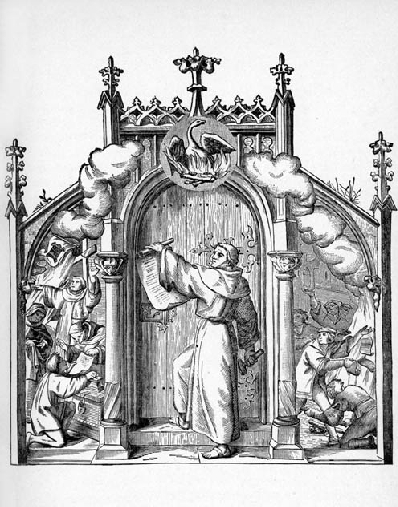
The popular belief is that on this day in 1517, Martin Luther posted his 95 theses, and sparked the Protestant Reformation. Later today it is my task to preach the Word of God. I feel obliged to include in the presentation of the Word, the actions of Martin Luther in 1517.

Ultimately, the importance that we find in scripture, and in history, that no human institution or human action is worthy of worship or praise, but rather it is God Almighty alone that has the power to save us from anything. Therefore, the important thing to understand is that through the prodding of the Holy Spirit, God granted Martin Luther the boldness to present this argument to the church. Certainly, Martin Luther had to respond to the prodding, but it is the Holy Spirit who reforms us, not an action by a single human, or human institution.

When we lose our way, and begin lifting up the institution above God, or even at equal position with God, we lose sight of the reforming and transformational character of God. This breaks God’s heart, because the Almighty loves us so much that when we fall into the traps that trap us in thinking that God requires a special formula, or the right “hocus pocus” to be effective, we become stagnant in our worship, and restrict ourselves from taking a step back and breathing in the fullness of the Holy Spirit. When we do this, God laughs and cries because we simply miss the point that God is God, and we should strive to be more like God, and less stuck on our own patterns and ideas about right and wrong worship.

The Almighty God alone judges. God is bigger than our churches. God seeks to grant us each a deep and true Shalom, wholeness, prosperity, peace, and completion. Only if we are willing to come together as the Church, are we going to see the true Reformation. However, that starts with our own personal expression.

God desires a personal relationship with each of us, and that relationship takes time and effort on our part. How do we respond to the grace that is present for us before we do anything? We are called to respond with JOY, GLADNESS, THANKSGIVING, and SERVICE. This has nothing to do with being Catholic, Presbyterian, Lutheran, Baptist, etc. This has to do with God, and coming together to be the true church.

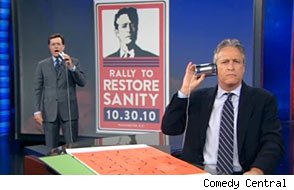
I think it odd that Jon Stewart reminds us that we have more that brings us together, than that which pulls us apart, but if we amplify our differences, we wont be able to see our similarities. God loves you, God loves me, and because of that we should respond by loving one another.

It never was Luther’s intention, nor the desire of God, for the result of the Reformation to split the church into a million different denominations. In fact it was intended simply to be a corrective, and a call for the church to remember that which God’s calls us. We are called to be the salt of the Earth, and to bring the love of God to all of those lacking hope. Therefore, I pray that on this Reformation Day, we as the Church of God can come together and participate in the Reformation of the World.